





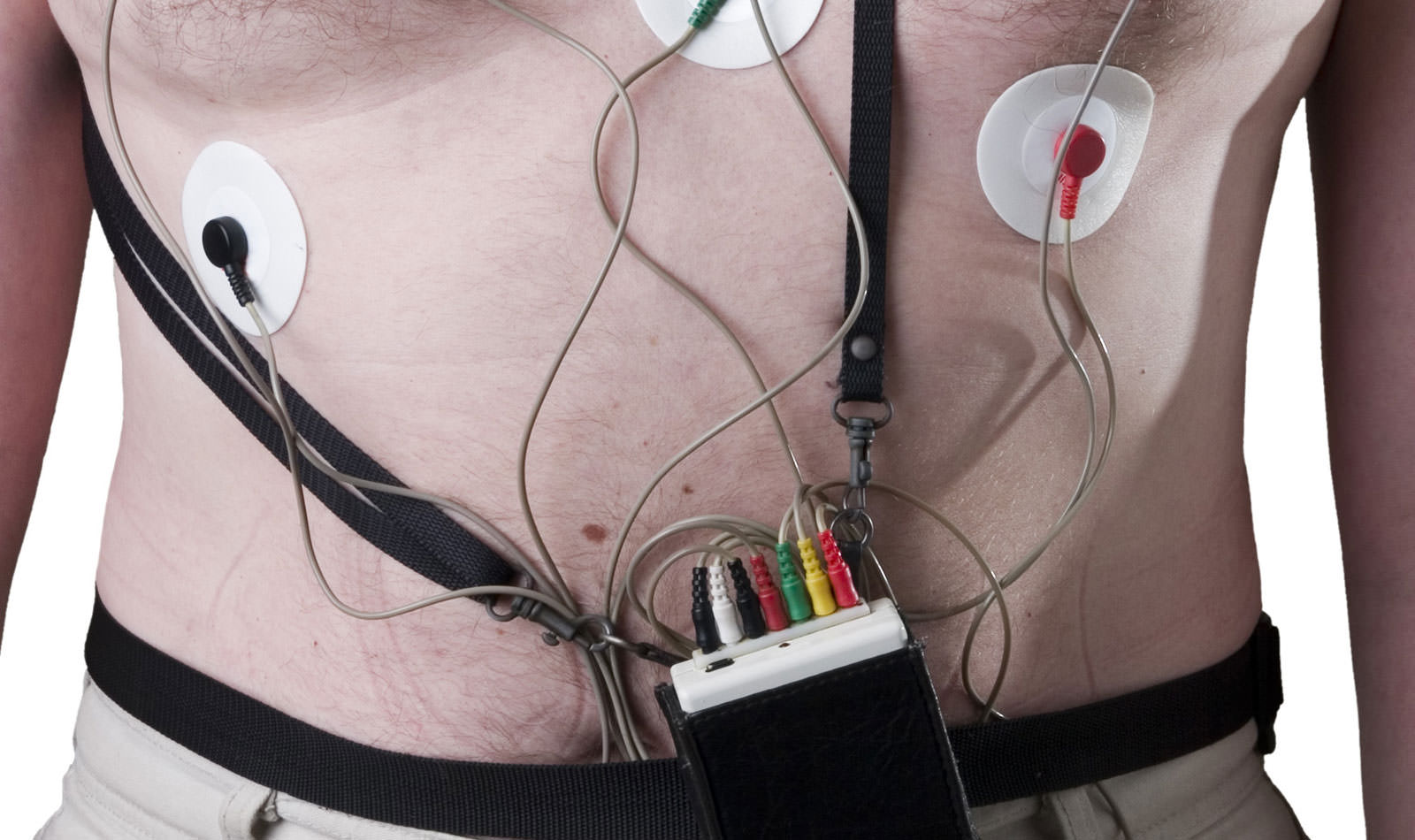
Holter Monitoring – How is the test performed?
The Holter monitor is a test with 24-hour recording of the electrocardiogram. An SOS Cardiologist comes to your home, examines you, places the Holter, and explains how it works. The test is carried out with a small device, slightly larger than a mobile phone, which the patient usually wears on their belt. Electrodes coming out of the device are applied to the patient’s body.
The patient continues their daily activities for the entire 24-hour period while connected to the device. In case of discomfort, the patient presses a button to “mark” the exact time on the recorder. The following day, SOS Doctors staff visit your home to remove the Holter.
The device is then delivered to an SOS Cardiologist, who connects it to a computer, analyzes the 24-hour electrocardiogram recording, and makes the diagnosis.
The test is completely painless and requires no preparation, while the patient does not need to make any changes to their daily routine.
When is 24-hour Holter monitoring recommended?
The 24-hour Holter monitoring increases the chances of detecting transient rhythm disorders that would not be noticed in a standard electrocardiogram, since the latter only lasts a few seconds.
Your doctor may recommend a 24-hour Holter monitoring in the following cases:
- In cases of arrhythmias
- For the investigation of coronary artery disease
- For the prevention of strokes in elderly patients
- For the detection of dangerous arrhythmias in patients after myocardial infarction
- For the detection of dangerous arrhythmias in patients who have undergone surgery for congenital angiopathies during childhood.
- For the detection of silent ischemia
- For the investigation of presyncopal, syncopal, or fainting episodes


